
Posted on Leave a comment

Mummy Ne Ek Purani Diary Nikali. Aur Humari Poori Life Change Ho Gayi.

Koi supplement nahi. Koi detox pill nahi. Bas ek diary — aur bahut saari herbs jo hum sab bhool chuke thei.

Aaj kal hum sab ek hi mode mein hain.

Google pe symptoms type karo. Ek influencer ki reel dekho. Ashwagandha order karo. Phir turmeric latte banao. Phir koi bolta hai “nahi nahi, giloy lena chahiye.” Phir ek WhatsApp forward aata hai ki giloy ke side effects hain. Phir phirse Google. Phir anxiety aur bhi zyada.

Hum sab basically ek health-confused generation hain.


Toh ek din, Mummy ne shelf ke peeche se ek purani diary nikali.

Haan. Ek asli, haath se likhi hui, pencil se underline ki hui, kahin se torn pages wali, kuch jagah toh barely padh paayein wali, purani Indian diary.

Aur usme tha — woh sab kuch jo hum sab desperately search karte hain.

"Thousands of rupees ke supplements jo hum aaj Amazon pe order karte hain — woh sab India ke ghar mein pehle se tha. Bas hum bhool gaye."

Diary ke andar

  • Digestion problems? Saunf, ajwain, licorice root. Hamare ghar mein roz peeya jaata tha.

  • Hamesha thakaan? Ashwagandha. Koi naya discovery nahi — generational secret tha yeh.

  • Neend nahi aati? Chamomile aur brahmi. No melatonin gummies needed.

  • Weight, metabolism? Milk thistle, dandelion, green coffee. Bina “slim tea” ke naam ke.

Woh sabse badi realisation thi. Itni saari "modern wellness" products — unka jawab already tha. Hamare hi ghar ki shelf pe. Hamare hi family ki writing mein.

Hum bade hue “ye sab toh bachpan ki baatein hain” soch ke.

  • Nani ne kadha banaya? “Ewww, kadvaa hai.”

  • Papa ne tulsi chai di? “Mujhe coffee chahiye.”

  • Mummy ne herbs wali chai banayi? “Mujhe Bournvita chahiye.”

Aur ab wahi generation, usi cheez ko “herbal wellness tea” ke naam se mahange mein khareed rahi hai. Online. Prime delivery ke saath.

Karma. But make it herbal.

Par yeh article guilt trip nahi hai.

Yeh ek choti si honest kahani hai.

Woh diary mili toh humne socha — agar yeh sab ek proper, clean, well-researched form mein available hota — bina kisi artificial stuff ke, plant-based tea bags mein, real packaging mein — toh?

Wohi sochke BRINITA bana.

Mummy ki recipes. Humari research. Aur ek bahut hi seedha-saadha belief — ki India ke paas duniya ka sabse powerful herbal knowledge hai. Bas use thoda respect chahiye tha.

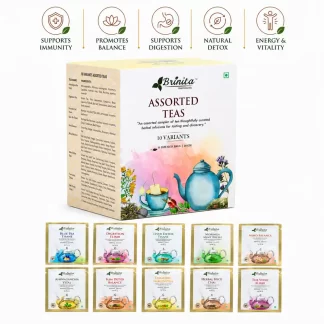
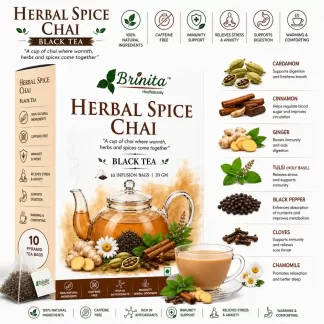
Aaj Brinita ke paas 10 herbal blends hain. Ashwagandha Vital se liver detox tak. Blue pea tisane se slim detox balance tak. Har blend mein normally jo hota hai usse zyada herbs. Koi artificial kuch nahi. Plant-based bags. Aur Mummy still approve karti hain har formula.

Jo quality check kisi bhi certification se badi hai.


“Woh diary abhi bhi hamare paas hai. Ek ek page, haath se likha hua.

Hum bas use cups mein pour kar rahe hain.”

Chai peena toh tha hi. Ab thoda differently peete hain.


TRY BRINITA

10 Ayurveda inspired infusions. Plant Based. No additives

Explore our Infusions

Posted on Leave a comment

Your Teabag Is Full of Plastic. Here’s the Proof — And What We Did About It.

Most wellness brands stop at the herb. We went further. This is the full story — the problem science discovered, the report that confirmed our choice, and the solution we built Brinita around.

01   The Problem 

You’re Drinking Billions of Plastic Particles. Every Single Cup.

Tea feels ancient. Natural. Safe. Hot water, herbs, ritual. Most people never question the bag holding those herbs — because it looks harmless. Some are beige. Some look like mesh. Some are shaped like little pyramids. They all appear to be part of a healthy, conscious choice.

But science tells a very different story about what’s happening the moment that bag hits boiling water.

11.6B Microplastic particles released by one plastic teabag per cup.

— McGill University, 2019

3.1B Additional nanoplastic particles — small enough to enter human cells.
— same study

500+ Years for a conventional plastic teabag to fully decompose in the environment.

Researchers at McGill University found that a single conventional teabag, steeped in boiling water for five minutes, releases approximately 11.6 billion microplastic particles and 3.1 billion nanoplastic particles — directly into your drink. A follow-up study by scientists at the Autonomous University of Barcelona confirmed that these particles are absorbed by human intestinal cells and can migrate into the bloodstream.

"Frequent tea drinkers could be repeatedly dosing themselves with billions of plastic particles, some small enough to potentially infiltrate human cells."

— Beyond Plastics Research Summary, citing multiple peer-reviewed studies

Microplastics have now been detected in human livers, lungs, hearts, brains, and placentas. The science is not alarmist. It is peer-reviewed, replicated, and growing.

The most common offenders — the materials hiding inside most commercial teabags:

  • Nylon (Polyamide) — used in mesh & pyramid bags
    Releases up to 1.2 billion nanoplastic particles per millilitre of hot water. The UAB 2024 study confirmed these are absorbed by gut cells and enter the bloodstream.
  • Polypropylene — used to heat-seal “paper” teabags
    Looks like paper on the outside. Plastic on the seams. Even “food grade” polypropylene degrades and releases particles when heated above 40°C — tea is brewed at 90–95°C.
  • PET (Polyethylene Terephthalate) — used in transparent bags
    The same material as plastic bottles. Marketed as premium. Hot liquid degrades the surface — the fragments go directly into your cup.

Think about how many cups of tea you drink a day. Now multiply that by 11.6 billion. That is not a fringe concern. That is a daily, cumulative, entirely avoidable exposure — and most brands have simply decided not to talk about it.

We decided we couldn’t build Brinita that way.

Continue reading Your Teabag Is Full of Plastic. Here’s the Proof — And What We Did About It.

Posted on Leave a comment

Tulsi: India’s Oldest Medicine, Quietest Healer, and a Love That Never Left

Tulsi stands alone as India’s timeless healer—grown in courtyards, trusted across generations, and now validated by science. 

“Tulsi: India’s Oldest Medicine, Quietest Healer”

The Herb That Grew Up With Us. In India, Tulsi is not just a plant.
It is memory. It is care. It is medicine that lived at home long before it lived in books.

Why Tulsi Never Needed Introduction

Long before prescriptions or pharmacies, Tulsi stood quietly in Indian courtyards—offering protection, balance, and healing. Not urgently. Not loudly. But faithfully.

Tulsi was never introduced to India.
India grew up with Tulsi.

“Subah Tulsi ke patte kha le.”
“Gala kharab? Tulsi daal ke paani pee.”

These weren’t medical advice. They were love.

Tulsi’s 5000-Year Legacy (5 Key Roles)
  1. The Courtyard Guardian

Grown near home entrances, Tulsi purified air and warded off negative energy.
Science confirms: Tulsi leaves release eugenol—natural air disinfectant.

  1. Daily Prevention Partner

Not taken only when sick, but to stay well.
Ayurveda calls it: Rasayana (rejuvenator).

  1. The Adaptogen Original

Helps body handle stress without force.
Modern term: HPA axis modulator (cortisol regulation).

  1. Respiratory Protector

Delhi smog, monsoon coughs, winter flu—Tulsi handled them all.
Clinical proof: Bronchodilator compounds (eugenol, ursolic acid).

  1. Nervous System Balancer

Mental fog, exam anxiety, life stress—Tulsi calms without sedation.


5 Traditional Tulsi Rituals (Still Relevant)
  • Morning Chew** (5-8 fresh leaves)

   → Daily immunity + mental clarity

  • Tulsi Jal** (2 leaves in water bottle)

   → Hydration + antioxidant protection

  • Evening Infusion** (hot water steep)

   → Stress release + sleep prep

  • Tulsi Ark** (2 drops in water)

   → Travel immunity + digestion

  • Kadha** (boil with ginger/clove)

   → Flu + weather change support


Brinita makes all 5 portable and mess-free.

“Tulsi Kha Le” — Voices Across Generations

Grandma (1960s): “Season change mein Tulsi le liya kar.”
Mom (1990s): “Exam se pehle Tulsi chai pi le.”
You (2026): “Delhi pollution mein Tulsi kadha banaya.”

Same herb. Same love. Different bottles.


Science Finally Catches Up (5 Proven Benefits)

Traditional Claim Modern Science Daily Impact
Stress relief ↓ Cortisol 27% (NIH study) No 3 PM crashes
Immunity boost ↑ T-cells 35% Fewer sick days
Respiratory support Bronchodilator effect Smog protection
Blood sugar balance ↓ Glucose 17-26% PCOS friendly
Sleep support ↑ GABA naturally Fresh mornings

Tulsi didn’t need science. Science needed Tulsi.


Your 7-Day Tulsi Reset Challenge

Days 1-3: Morning ritual

Days 4-7: Morning + evening double dose

Track these 3 markers:

✅ Stress (1-10 scale, morning/evening)

✅ Energy consistency (no crashes)

✅ Cold symptoms (frequency)

Expected: 20-30% improvement across all.

📸 Share your progress! Tag @brinitalife on instagram


Tulsi Across India: Regional Wisdom

  • NORTH: Tulsi + saunf = digestion king
  • SOUTH: Tulsi + elaichi = respiratory rescue
  • EAST: Tulsi + adrak = monsoon shield
  • WEST: Tulsi + kali mirch = winter warrior


Brinita blends capture all 4 regional wisdoms.


FAQs

  1. Is Tulsi Safe to Take Daily?
    Yes! 5-15g fresh leaves daily (or 2-3 cups infusion) is safe lifelong. Ayurveda calls it rasayana (rejuvenator) for consistent use. Perfect for daily stress + immunity without side effects.
  2. Can Pregnant Women Drink Tulsi?     
    After first trimester = excellent. Tulsi supports immunity + morning sickness naturally. Consult your doctor, but generations of Indian moms confirm safety.
  3. Tulsi Benefits for Kids?           
    Ages 5+ love it! 2-3 fresh leaves daily boosts focus, fights seasonal colds. Kid-friendly: Tulsi + honey for coughs, no drowsiness.
  4. Tulsi vs Ashwagandha: Which is Better?         
    Tulsi = daily companion (stress + immunity)
    Ashwagandha = intense stress rescue (work pressure, exams)
    Use both! Morning Tulsi, evening Ashwagandha.
  5. Fresh Tulsi Leaves vs Dried: Which Works Best?
    Fresh = seasonal potency
    Dried (Brinita) = year-round consistency + travel-ready
    Science shows dried retains 92% active compounds (eugenol, ursolic acid).
  6. Does Tulsi Really Lower Blood Sugar?
    Yes—17-26% fasting glucose drop (clinical studies). Perfect for PCOS, diabetes, post-thali spikes. Drink 30 mins after meals.
  7. Tulsi for PCOS and Hormonal Balance?
    Adaptogenic magic! Regulates cortisol → balances estrogen/progesterone. Women report regular cycles + reduced cravings in 3 months.
  8. Best Time to Take Tulsi for Stress?
    Morning (empty stomach) = cortisol shield all day
    Evening (infusion) = GABA boost, deep sleep
    Double dose = unbeatable stress protection.
  9. Tulsi Side Effects or Interactions?
    Zero known at normal doses. Avoid blood thinners + sedatives (mild interaction). Safe with allopathy meds.
  10. How Much Tulsi for Weight Loss?
    Not direct fat-burner, but stress → cortisol → belly fat blocker. 2 cups daily + walking = visible results (waist reduction).


Posted on Leave a comment

40°C Outside. Chai Inside.

People drinking hot chai at a roadside tea tapri during extreme 40 degree summer heat in India

“Why Indians Still Reach for Tea in Peak Summer”


It is 40°C outside.
The air feels heavy. Fans struggle. Cold drinks seem logical.

And yet, somewhere in India, someone just asked:

“Chai milegi?”

This question is not about thirst.
It never was.

In a country where summer can feel relentless, chai continues to appear in cups, hands, and conversations. Not because it cools the body—but because it comforts something deeper.

Summer Chai Is Not About Beating the Heat

Indians do not drink chai in summer to cool down. They drink it to steady themselves.

Chai is not treated as a seasonal beverage. It is treated as a constant—something reliable when everything else feels uncomfortable. When heat drains energy and patience, the mind looks for familiarity.

Chai provides that familiarity.

When the Weather Changes, Chai Doesn’t

Summer disrupts daily rhythm. Sleep reduces. Appetites shift. Tempers shorten. In these moments, people instinctively reach for what feels unchanged.

Chai represents:

  1. A fixed moment in the day
  2. A familiar taste
  3. A known routine

Even when the weather is extreme, chai stays predictable. That predictability brings calm.

The Pause That Chai Creates

What people crave in summer is not stimulation—it is a pause.

Chai forces stillness.

  • You stop what you are doing.
  • You sit.
  • You sip.

Unlike cold drinks that disappear in seconds, chai demands time. It slows the moment down. That slowdown is the real relief.

Masala Chai and the Feeling of Balance

Masala chai plays a special role in this habit.

Spices like ginger, cardamom, clove, and cinnamon do not excite the system—they ground it. Even in heat, these flavours feel balanced rather than overwhelming.

Masala chai doesn’t refresh the body.
It reassures the mind.

That is why many people prefer masala chai even during the hottest months.

Indian Chai Quirks: Lines That Say Everything

Chai in India lives through everyday language. These familiar lines explain more than any science ever could:

  • “Garmi ho ya sardi, chai toh chai hoti hai.”
  • “Pehle chai, phir baat.”
  • “Dimag kaam nahi kar raha, chai chahiye.”
  • “Bas ek cup chai mil jaaye.”
  • “Break nahi, chai peene ja rahe hain.”
  • “Chai pee ke sab theek ho jaata hai.”

None of these are about thirst.
They are about reset, reassurance, and rhythm.

Chai as Emotional Regulation

In India, people rarely say they are overwhelmed. Instead, they say:

“Chai chahiye.”

This is not a request for a drink.
It is a request for a pause.

Chai marks a boundary between stress and calm. In summer—when fatigue builds faster—this emotional reset becomes even more important.

Why Cold Drinks Never Replace Chai

Cold drinks cool the body.
They do not anchor the mind.

They are fast, individual, and forgettable. Chai is slow, shared, and remembered. It creates conversation, silence, and connection.

In uncomfortable conditions, people choose comfort over refreshment.

Steaming cutting chai on a roadside tea stall table in India during hot summer weather.
A glass of chai, a roadside table, and the comfort that never changes.

A Habit That Became Emotional

Over time, chai stopped being logical. It became emotional infrastructure.

It signals:

  • Familiarity
  • Belonging
  • Safety
  • Pause

That is why it survives every season—including the harshest summers.

Conclusion: Chai in Summer Is About Comfort, Not Climate

Indians drink chai in summer not because they ignore heat, but because chai offers something more essential.

Consistency in chaos.
Familiarity in discomfort.
A pause when the day feels relentless

Posted on Leave a comment

The Evolution of Tea in India

The evolution of tea in India from tea plantations to chai as an everyday cultural ritual.

“How a Foreign Leaf Became Chai, Comfort, and an Everyday Emotion”

In India, tea is not just a drink.
It is a pause in the day.
A shared moment.
A quiet comfort during stress.

And yet, the most surprising truth remains—tea is not of Indian origin.

India did not grow up drinking tea. It learned to love it, adapt it, and eventually turn it into something deeply emotional: chai.

Tea Was Never Part of Ancient Indian Tradition

Before the 19th century, Indians did not drink tea as part of daily life. Traditional beverages were rooted in milk, spices, and herbal preparations like kadha and warm infusions guided by seasonal wisdom.

Tea leaves were absent from kitchens.
There were no tea breaks.
No evening chai rituals.

Although wild tea plants existed in Assam, tea drinking was not culturally practiced in Indian society.

Tea entered India from the outside.

The British Introduction of Tea in India

In the early 1800s, during colonial rule, the British East India Company began cultivating tea in India to reduce Britain’s dependence on Chinese tea.

Large tea plantations were developed in:

  • Assam
  • Darjeeling
  • The Nilgiris

Tea was grown for export. Indians worked on tea estates, but did not drink the tea they produced. For decades, tea remained a foreign, bitter beverage associated with colonial spaces.

Tea gardens of Assam—where India’s journey with tea began and a global legacy was cultivated leaf by leaf.
scenic view of a tea plantation in Assam, showing lush green tea gardens and workers harvesting fresh tea leaves, highlighting the region’s role in shaping India’s tea culture and global tea industry.

When Tea Met Indian Taste — and Became Chai

Tea’s journey changed the moment Indians began to adapt it.

Milk softened its bitterness.
Sugar added comfort.
Spices brought familiarity.

This transformation gave birth to chai—a version of tea that finally felt Indian.

Chai was warmer, richer, and more satisfying. It aligned with Indian taste, digestion, and emotion. Tea stopped feeling foreign and started feeling homely.

Masala Chai: The Turning Point

Masala chai marked the moment tea truly became Indian.

By blending tea with ginger, cardamom, cloves, cinnamon, black pepper, and sometimes fennel, Indians infused tea with centuries of spice wisdom. The result was not just flavour—but comfort.

Masala chai was:

  • Warming in winter
  • Grounding during stress
  • Familiar across regions

It wasn’t medicine, but it felt therapeutic.

Chai in Every Season — Even in Summer

One of the most uniquely Indian truths is this:

Indians drink chai even in peak summer.

Under scorching sun, roadside chai stalls remain busy. For Indians, chai is not about cooling the body—it is about calming the mind.

A cup of chai in summer:

  • Signals a break
  • Offers emotional comfort
  • Creates a pause in chaos

It is ritual, not logic.

Chai as a Stress Reliever and Social Bond

In modern India, chai has become an emotional anchor.

After long workdays.
During office breaks.
In moments of anxiety or exhaustion.

People don’t say, “Let’s relax.”
They say, “Chai peete hain.”

Chai represents:

  • Relief
  • Familiarity
  • Human connection
  • Shared silence or conversation

It is therapy without words.

The Rise of India’s Chai Culture

Chai spread everywhere:

  • Railway platforms
  • Street corners
  • Factories and offices
  • Homes and hostels

The chaiwala became part of daily life. Conversations, debates, friendships, and decisions unfolded over cups of chai.

Tea stopped being a product.
It became a feeling.

Tea in India Today

Today, India is one of the world’s largest producers and consumers of tea. From simple chai to masala chai, tea flows through everyday life—across regions, classes, and climates.

But its story matters.

Tea is not ancient Indian heritage.
It is adopted history, shaped by people, milk, spices, summers, stress, and time.

Conclusion: A Borrowed Leaf, Made Indian by Emotion

Tea may not have originated in India—but chai belongs to India.

What began as a colonial crop transformed into:

  • A daily habit
  • A stress reliever
  • A social ritual
  • A shared emotion

In India, chai is not just consumed.
It is felt, remembered, and repeated—day after day.

A foreign leaf.
Made Indian by love.


Posted on Leave a comment

Before Tea Was a Beverage, It Was Tradition

Evolution of herbal tea in India from Ayurvedic kashayam to modern wellness infusions

“The Evolution of Herbal Tea in India — From Kadha to Everyday Rituals”

In India, herbal tea did not begin as a wellness trend or lifestyle choice. It began as something far more essential.

Long before tea leaves, kettles, or teacups existed, Indians prepared warm herbal drinks to restore balance in the body. These preparations were not called tea. They were known as kashayam, kwath, or kadha—deeply rooted in the wisdom of Ayurveda.

What we call herbal tea today is simply the modern expression of this ancient tradition.

A Living Timeline of Herbal Tea in India

Ancient Times: When Herbs Were Part of Daily Life

More than three thousand years ago, Indian households relied on herbs not only for healing, but for everyday nourishment. Water infused with leaves, seeds, roots, bark, and flowers was commonly consumed as part of daily routines.

These herbal drinks were chosen according to season and climate.

Example:
In hot regions, coriander or fennel seeds were steeped in warm water and sipped throughout the day to cool the body and support digestion. This was not considered medicine—it was simply how people drank water.

Herbal infusions were intuitive, local, and woven into daily living.

Classical Ayurvedic Era: Kashayam and Kwath

As Ayurvedic knowledge became more structured and documented, herbal preparations took defined forms. Decoctions known as kashayam or kwath were prepared by boiling specific combinations of herbs to extract their properties.

These drinks were prescribed based on:

  • Body constitution
  • Seasonal changes
  • Physical imbalances
Example:
A warming ginger–pepper decoction for sluggish digestion, or a soothing licorice-based brew for throat discomfort.

Here, herbal drinks became both science and tradition, passed down with care and understanding.

Ayurvedic herbs being ground in a stone mortar as part of traditional herbal preparation in India.
Ayurvedic Herbal Preparation in Traditional Indian Practice

The Rise of Kadha in Indian Homes

Over centuries, kadha became the most recognisable household form of herbal preparation. Unlike clinical formulations, kadha belonged to the kitchen, not the clinic.

Every family had its own recipe.

Example:
During monsoon or winter, families boiled tulsi, ginger, black pepper, clove, and cinnamon together. Children were given a few spoonfuls, while elders drank it warm in the evening.

Kadha was strong, concentrated, and prepared with intention—used when the body needed extra support.

The Gentle Shift: From Strong Decoctions to Everyday Infusions

As lifestyles evolved, people began seeking gentler herbal drinks suitable for regular consumption. Not every day required a strong decoction.

Slowly, preparation methods changed:

  • Leaves were steeped instead of boiled
  • Flowers were infused lightly
  • Flavours became softer and more balanced
Example:
Tulsi leaves infused in hot water after meals, or floral infusions prepared in the evening to calm the body.

This marked a natural transition—from medicinal kadha to everyday herbal infusions.

Modern Times: Herbal Tea Finds a New Form

In recent decades, herbal tea re-emerged in a format that suited modern life. The philosophy remained ancient, but the form became simpler and more accessible.

Herbal teas today are:

  • Light and balanced
  • Easy to prepare
  • Designed for daily wellness
  • Rooted in traditional plant wisdom
Example:
A modern stress-relief herbal tea may include tulsi, lemongrass, or calming flowers—but its purpose mirrors the evening herbal infusions prepared generations ago.

What changed was convenience, not intent.

What This Evolution Tells Us

Across centuries, one belief has remained constant:

What we drink should support the body gently, consistently, and in harmony with nature.

Herbal tea in India is not a borrowed concept.
It is heritage—adapted, not invented.

A Tradition That Continues to Brew

From ancient Ayurvedic kashayam to household kadha, from gentle infusions to modern herbal teas, the journey has never been about trends.

It has always been about balance.

In India, herbal tea is not something new.
It is something remembered—still brewed, still trusted, still evolving.

Continue reading Before Tea Was a Beverage, It Was Tradition

Posted on Leave a comment

“Why Evening Habits Matter More Than Morning Routines”

Woman following a calming evening routine in bed to improve sleep quality and overall wellness.

Morning routines get a lot of attention. Waking up early, exercising, planning the day, and staying disciplined are often promoted as the keys to energy and productivity. Yet many people follow strong morning routines and still feel tired, unfocused, or drained by the afternoon.

This happens because energy is not created in the morning.
It is built through recovery—and recovery mostly happens in the evening and at night.

Why Do Good Mornings Fail When Evenings Are Ignored?

Good mornings fail when evenings are ignored because the body restores itself at night, not during the day. If the evening does not support rest and recovery, sleep quality drops and next-day energy suffers.

Morning effort cannot fix poor recovery from the night before.

Why the Body Recovers in the Evening, Not the Morning

The body follows a natural rhythm. As the day ends, it prepares for rest, repair, and balance. During the evening and night, the body works on:

  • Repairing tissues
  • Balancing hormones
  • Calming the nervous system
  • Preparing energy for the next day

Mornings are meant for activity and output. When recovery does not happen properly at night, the body starts the day already tired.

How Evening Stimulation Reduces Sleep Quality

The body cannot recover when it stays mentally and emotionally stimulated late into the evening. Stressful thoughts, constant screen use, and emotional engagement keep the nervous system alert.

When this happens, sleep becomes lighter and less refreshing—even if you sleep for many hours.

Common Evening Habits That Lead to Morning Fatigue

Some everyday habits quietly reduce recovery and sleep quality:

  • Eating heavy or late dinners
  • Using phones or screens close to bedtime
  • Going to bed at different times each night
  • Carrying work or emotional stress into the night

Over time, these habits make waking up tired feel normal.

Why Morning Routines Cannot Fix Night-Time Damage

Morning routines help with focus and structure, but they cannot replace rest. Exercise, planning, or motivation may give a short boost, but they do not restore what was missed during the night.

When recovery is incomplete, energy drops later in the day—no matter how strong the morning routine is.

What Evenings Should Support Instead

Evenings should help the body slow down and prepare for rest. This means:

  • Reducing mental and digital stimulation
  • Eating lighter meals and earlier
  • Keeping sleep timings consistent
  • Allowing the body and mind to relax

These small changes help improve sleep quality and make mornings feel easier.

Energy Is Built Before the Day Begins

Feeling tired is not a personal failure. It is often the result of how the day ends, not how it starts.

When evenings support recovery, mornings naturally become clearer, lighter, and more energetic—without forcing productivity.

At Brinita, this belief guides a wellness approach focused on simple, repeatable rituals that support the body’s natural rhythm.

Because real energy comes from recovery—and recovery begins the night before.

Continue reading “Why Evening Habits Matter More Than Morning Routines”

Posted on Leave a comment

Why Do So Many People Wake Up Tired Despite Getting Enough Sleep?

Person waking up tired in bed despite getting enough sleep, showing signs of poor sleep quality and morning fatigue.

Waking up tired has quietly become normal in modern life. Many people sleep for the recommended 7–8 hours yet begin their day feeling fatigued, mentally foggy, and unrefreshed. This growing pattern suggests that sleep duration alone does not guarantee recovery.

Instead, persistent morning tiredness points to a deeper issue: the body may be asleep, but it is not fully restoring itself.

Sleep Is a Biological Recovery Process

Sleep is not passive rest. It is a highly active biological state in which the body regulates hormones, repairs tissues, consolidates memory, and resets the nervous system. These functions occur across multiple sleep stages, particularly deep (slow-wave) sleep and REM sleep.

When sleep cycles are shortened or fragmented, the body remains in a low-grade stress state overnight. This results in non-restorative sleep, where recovery is incomplete even if total sleep time appears sufficient.

Main Reasons People Wake Up Tired

  1. Chronic Stress and Nervous System Overactivation
    Persistent stress keeps the nervous system in an alert state. Elevated cortisol levels in the evening prevent the body from fully entering parasympathetic (rest-and-repair) mode during sleep, reducing deep sleep quality.
  2. Circadian Rhythm Disruption
    Irregular sleep schedules, artificial lighting, and inconsistent routines interfere with melatonin release. Circadian misalignment delays restorative sleep phases and is strongly linked to morning fatigue.
  3. Night-Time Digestive Load
    Late or heavy meals activate digestion during hours meant for cellular repair. This competition for energy reduces sleep depth and recovery efficiency.
  4. Nutritional and Botanical Deficiency
    Modern diets often lack nutrients and plant compounds that support stress regulation. Traditional systems and emerging research highlight the importance of adaptogenic support in improving resilience and sleep quality.
  5. Hormonal Dysregulation
    Hormones essential for repair—especially growth hormone—are released primarily during deep sleep. Fragmented sleep disrupts this process, leading to persistent tiredness over time.

Why Fatigue Persists Despite Adequate Sleep

Morning fatigue is frequently misinterpreted as sleep deprivation. In reality, it is often a sign of incomplete physiological recovery.

When stress, circadian disruption, and digestive load dominate the night, the body exits sleep without restoring energy reserves. Over time, fatigue becomes habitual rather than occasional.

Evidence-Based Ways to Improve Morning Energy

Research and clinical observations suggest that improving recovery depends on:

  • Consistent sleep and wake timings
  • Reduced evening stimulation
  • Earlier, lighter meals
  • Nervous system calming routines
  • Regular recovery-supportive habits

Small, repeatable adjustments compound into meaningful improvements in sleep quality and daily energy.

Reframing Morning Fatigue: A Recovery Problem, Not an Energy Problem

Persistent tiredness on waking is not a lack of discipline or motivation. It is a biological signal that recovery systems are under strain.

Modern lifestyles prioritise productivity over restoration. Addressing morning fatigue requires alignment with natural rhythms rather than forcing stimulation.

At Brinita, this perspective shapes how everyday wellness is approached—through gentle, repeatable rituals that support the body’s natural restorative processes.

Because sustainable energy is built through recovery—and recovery begins long before the morning alarm.

Sleep Deprivation and Stress Disrupting Healthy Mornings
A stressed individual experiencing poor sleep habits and mental exhaustion, illustrating how stress, screen exposure, and disrupted sleep cycles lead to tired mornings.

Continue reading Why Do So Many People Wake Up Tired Despite Getting Enough Sleep?

Posted on Leave a comment

“Why Functional Herbal Teas Are Becoming the Future of Everyday Wellness — And Why That Matters”

Most of us wake up to screens before sunlight.

Our days are spent sitting—working, scrolling, commuting. Outdoor time is limited. Environmental stress is constant. And mental pressure rarely switches off.

This has quietly become normal.

Not unhealthy in obvious ways—but deeply imbalanced.

Over time, the body responds.

Not dramatically, but subtly—through fatigue, restlessness, poor sleep, digestive discomfort, and mental exhaustion.

The problem isn’t effort.

It’s that modern life leaves little room for balance.

Why Everyday Wellness Matters

Wellness today cannot be extreme or time-consuming.

It has to fit into real life—between meetings, after long screen hours, on the busiest days.

This is why functional herbal teas are returning.

Not as a trend, but as support.

They don’t stimulate.

They don’t demand discipline.

They quietly bring balance through plants that have always been part of daily living.

While building Brinita, one belief became clear to me:

If a wellness habit cannot be practiced daily, it will never truly help.

“Our goal is not to make wellness louder—but gentler, more consistent, and more human.”

“In a world shaped by screens, sitting, environmental strain, and constant mental stress, wellness can no longer be occasional—it must be part of everyday life.

https://www.linkedin.com/pulse/why-functional-herbal-teas-becoming-future-everyday-wellness-goyal-4qlkc


Posted on Leave a comment

A Quiet Approach to Everyday Wellness


Wellness does not always come from big changes or strict routines. Often, it grows from simple habits that feel natural and easy to maintain. At Brinita, we see wellness as something that blends into daily life—calm, steady, and sustainable.

In today’s fast-paced world, wellness is often linked to intensity. We believe a gentler approach works better over time. Practices that support balance without pressure are more likely to last and feel meaningful. This belief shapes how we think about everyday wellness and the small rituals that support it.

The Importance of Simple Rituals

Simple rituals help slow the pace of the day. They do not require effort or rules—only a moment of attention. When repeated regularly, these small actions can create a sense of calm and stability.

Tea has long been part of daily wellness routines. The process of brewing and enjoying a cup of herbal tea encourages a pause, even if only for a few minutes. It is a quiet way to reconnect and reset.

Balance Through Thoughtful Choices

Balance is often achieved through thoughtful selection rather than excess. Clean ingredients, freshness, and harmony matter more than complexity. When things are chosen with care, the experience feels light, comfortable, and easy to enjoy every day.

This approach applies not only to what we consume, but also to how we live—choosing consistency over trends and ease over extremes.

A Refined Wellness Perspective

Brinita is guided by a simple idea: wellness should feel supportive, not demanding. Inspired by traditional approaches that value balance and simplicity, our focus is on creating experiences that fit naturally into everyday routines.

When wellness feels easy and familiar, it becomes part of life rather than a task. Sometimes, it begins with a warm cup, a quiet moment, and the comfort of something thoughtfully prepared.

https://www.linkedin.com/pulse/quiet-approach-everyday-wellness-brinitalife-e5k3c