
The Evolution of Tea in India
The Journey of a Foreign Leaf How a Foreign Leaf Became Chai, Comfort, and an...
From Ancient Wisdom to Modern Wellness
In India, herbal tea did not begin as a wellness trend or lifestyle choice. It began as something far more essential.
Long before tea leaves, kettles, or teacups existed, Indians prepared warm herbal drinks to restore balance in the body. These preparations were not called tea. They were known as kashayam, kwath, or kadha—deeply rooted in the wisdom of Ayurveda.
What we call herbal tea today is simply the modern expression of this ancient tradition.
Thousands of years of wisdom, one continuous thread
The story of herbal tea in India is not linear—it is layered. Each era added depth, adapting ancient wisdom to the needs of the time.
More than 3,000 years ago, before the word “wellness” existed
More than three thousand years ago, Indian households relied on herbs not only for healing, but for everyday nourishment. Water infused with leaves, seeds, roots, bark, and flowers was commonly consumed as part of daily routines.
These herbal drinks were chosen according to season and climate.
Herbal infusions were intuitive, local, and woven into daily living.
When herbal drinks became both science and tradition
As Ayurvedic knowledge became more structured and documented, herbal preparations took defined forms. Decoctions known as kashayam or kwath were prepared by boiling specific combinations of herbs to extract their properties.
Here, herbal drinks became both science and tradition, passed down with care and understanding.
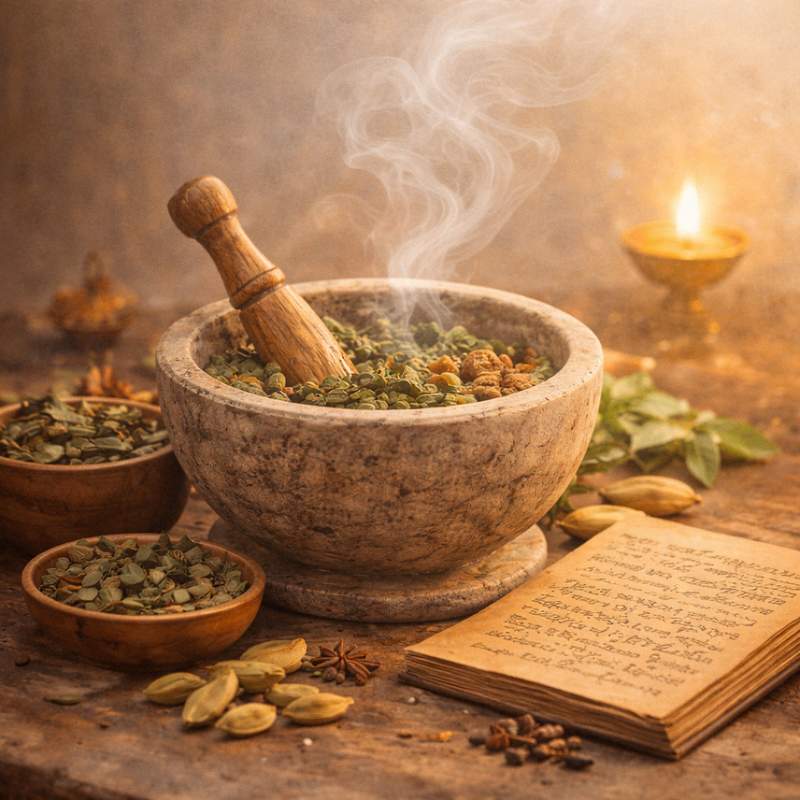
Ayurvedic Herbal Preparation in Traditional Indian Practice
From clinic to kitchen — where healing became familiar
Over centuries, kadha became the most recognisable household form of herbal preparation. Unlike clinical formulations, kadha belonged to the kitchen, not the clinic.
Every family had its own recipe.
Kadha was strong, concentrated, and prepared with intention—used when the body needed extra support.
Not every day required a strong decoction
As lifestyles evolved, people began seeking gentler herbal drinks suitable for regular consumption. Not every day required a strong decoction.
This marked a natural transition—from medicinal kadha to everyday herbal infusions.
Ancient philosophy, simpler format
In recent decades, herbal tea re-emerged in a format that suited modern life. The philosophy remained ancient, but the form became simpler and more accessible.
What changed was convenience, not intent.
Heritage adapted, not invented
Across centuries, one belief has remained constant:
What we drink should support the body gently, consistently, and in harmony with nature.
Herbal tea in India is not a borrowed concept.
It is heritage—adapted, not invented.
Still brewed, still trusted, still evolving
From ancient Ayurvedic kashayam to household kadha, from gentle infusions to modern herbal teas, the journey has never been about trends.
It has always been about balance.
In India, herbal tea is not something new.
It is something remembered—still brewed, still trusted, still evolving.
Herbal tea in India originated from Ayurvedic herbal preparations where herbs, roots, and spices were boiled or infused in water to support daily balance and health. These weren’t called “tea” originally—they were kashayam, kwath, or kadha.
In ancient India, herbal teas were known as kashayam, kwath, or kadha, depending on the method of preparation and the intended use. Each had specific extraction methods and purposes.
Kadha is a strong herbal decoction prepared by boiling herbs for specific conditions—used when the body needs extra support.
Herbal tea is a lighter infusion designed for regular, everyday use—gentle enough for daily wellness without overwhelming the system.
Herbal drinks were important in Ayurveda because they were used for prevention, balance, and daily support rather than only for treating illness. The philosophy was maintaining wellness through gentle, consistent support aligned with seasons and individual constitution.
No. Herbal tea in India is a continuation of ancient Ayurvedic practices, adapted into simpler and more convenient forms. What changed was the format and accessibility—the underlying wisdom remained the same.
Yes, but that’s exactly why modern herbal teas exist. Unlike kadha (which is strong and used when needed), herbal teas are designed to be gentle enough for daily consumption while still providing the benefits of traditional herbs.
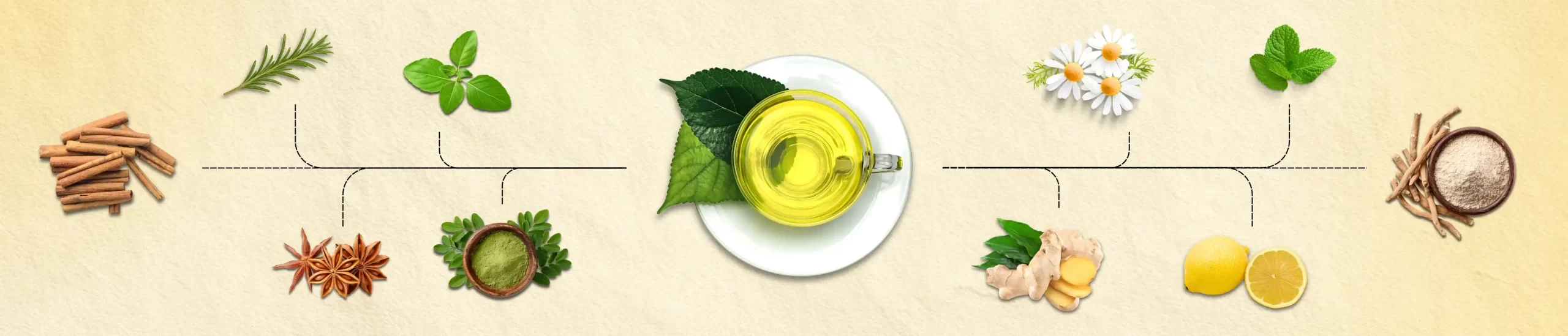
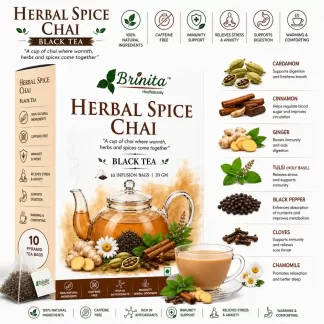
Traditional herbs included tulsi, ginger, turmeric, black pepper, clove, cinnamon, fennel, coriander, licorice, cardamom, and many others—chosen based on season, climate, and individual needs. Each herb had specific properties understood through centuries of observation.
Ancient Wisdom, Modern Convenience
From kashayam to your cup — heritage you can brew daily.
Share this post:
Discover More Articles You Might Like
The Journey of a Foreign Leaf How a Foreign Leaf Became Chai, Comfort, and an...

When Sleep Duration Isn’t the Problem Why You Wake Up Tired — Even After Sleeping...

India’s Timeless Healer Tulsi: India’s Oldest Medicine, Quietest Healer Tulsi stands alone as India’s timeless...

LIVER WELLNESS · EVERYDAY RITUAL There’s something grounding about wrapping both hands around a warm...

One tea helps you choose the moment. The other helps you enjoy it. You...

Most wellness brands stop at the herb. We went further. This is the full story...
Disclaimer The statements have not been evaluated by FSSAI. This product is not intended to diagnose, cure or prevent any disease. Children and pregnant women should consult a doctor before use.











0 Comments